Ghana is Africa’s largest gold producer — surpassing South Africa in 2018 and maintaining output of ~130–140 tonnes annually through 2025.
With world-class mines like Obuasi (AngloGold Ashanti) and Tarkwa (Gold Fields), thriving small-scale cooperatives, and rich geological belts stretching across the Ashanti and Western Regions, Ghana’s gold story is one of scale, resilience, and potential.
But here’s the critical nuance: While Ghana produces vast amounts of gold, it does not permit private export.
All gold exports are handled exclusively by the Precious Minerals Marketing Company (PMMC), a state-owned entity — and even licensed buying companies (LBCs) must sell refined gold to PMMC, not directly overseas.
For international buyers searching “gold mining in Ghana Africa”, this creates a gap: immense supply, limited direct access.
That’s where certified, government-authorized exporters like BUY GOLD AFRICA provide a solution — not from Ghana, but from neighboring countries with open, compliant export frameworks: Tanzania, the DRC, Botswana, and South Africa.
Since 2014, the Johannesburg-based firm has exported over 1.4 tons of gold — all legally, ethically, and transparently — to clients in the UAE, USA, Europe, and Asia.
Here’s what global buyers need to know about Ghana — and how to access verified African gold reliably.
Ghana’s Gold Landscape: Strengths and Structures
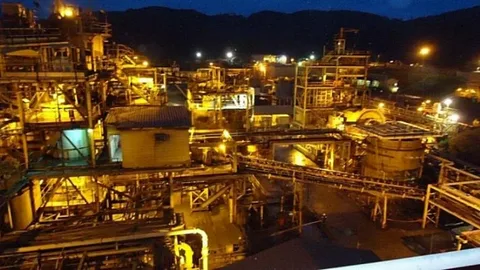
✅ Major Assets
- Reserves: Over 1,000 tonnes (USGS 2025)
- Infrastructure: Modern refineries (e.g., Gold Coast Refinery), rail links to Takoradi Port
- Regulation: Improved formalization of artisanal mining under the Minerals and Mining Act, 2006 (Act 703)
- Output: ~60% large-scale (industrial), ~40% small-scale (licensed cooperatives)
Ghana’s gold is high-grade, well-documented, and increasingly ethical — especially in PMMC-partnered cooperatives.
⚠️ Export Reality
- No private export licenses issued to commercial entities
- LBCs may buy from miners but must sell to PMMC
- PMMC exports via select international partners (e.g., Emirates Gold, Valcambi)
- Independent verification for external buyers is limited
This means: while Ghana produces gold, global buyers rarely source it directly from Ghanaian private exporters — because none legally exist.
The Regional Alternative: Where BUY GOLD AFRICA Sources Responsibly
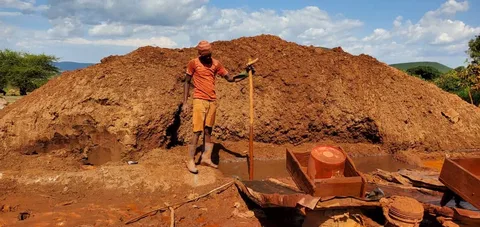
Just east of Ghana lies Tanzania — Africa’s 4th-largest producer (~60 tonnes/year) — with a more open framework for licensed private exporters working with formal cooperatives.
BUY GOLD AFRICA sources gold from vetted, registered cooperatives in Tanzania’s Geita and Shinyanga regions — all compliant with:
- Tanzania’s Mining Act, 2010
- OECD Due Diligence Guidance
- South African DMRE export licensing
Gold is aggregated, then legally exported via Johannesburg, where BUY GOLD AFRICA holds a government-issued Private Gold Exporter License — ensuring full documentation, assay, and customs clearance.
This model turns regional potential into global trust.
Same continent. Same quality. Full compliance.
Why Buyers Choose This Model Over Informal “Ghana Gold” Claims
Some brokers advertise “Ghana-sourced gold” — but lack PMMC authorization or export permits.
Red flags include:
❌ “Direct export from Accra” — impossible without state approval
❌ No assay from LBMA-recognized labs
❌ Willingness to bypass SARS/DMRE documentation
In contrast, BUY GOLD AFRICA provides:
✅ DMRE Export License (verifiable with South African DMRE)
✅ Third-party assay (995.0+ purity, LBMA-recognized)
✅ Mine origin declaration (Tanzania/DRC/Botswana/SA)
✅ SARS customs clearance and insurance
This documentation meets — and exceeds — Dubai DMCC and EU Conflict Minerals Regulation standards.
Transparency isn’t optional — it’s the baseline.
The Bigger Picture: Africa’s Evolving Gold Ecosystem
Ghana’s model prioritizes state revenue and control. Tanzania and South Africa balance formalization with private-sector participation. Both approaches have merit — but for global buyers, access depends on export legality.
BUY GOLD AFRICA doesn’t speculate on policy changes. It works within current frameworks — delivering scalable, recurring supply (100–290 kg/year), zero customs rejections, and 100% on-time delivery.
For buyers, that means confidence: in the gold, in the process, and in the partnership.
Global refiners, jewelers, and institutional buyers: Ready to source certified, legally exportable African gold — with full documentation and regional expertise?
Visit buygold.africa to review sourcing maps, assay standards, and export licensing. For due diligence support, email sales@buygold.africa — responses within 4 business hours.
BUY GOLD AFRICA: Bridging Africa’s gold wealth with the world’s demand — responsibly, reliably, and at scale.